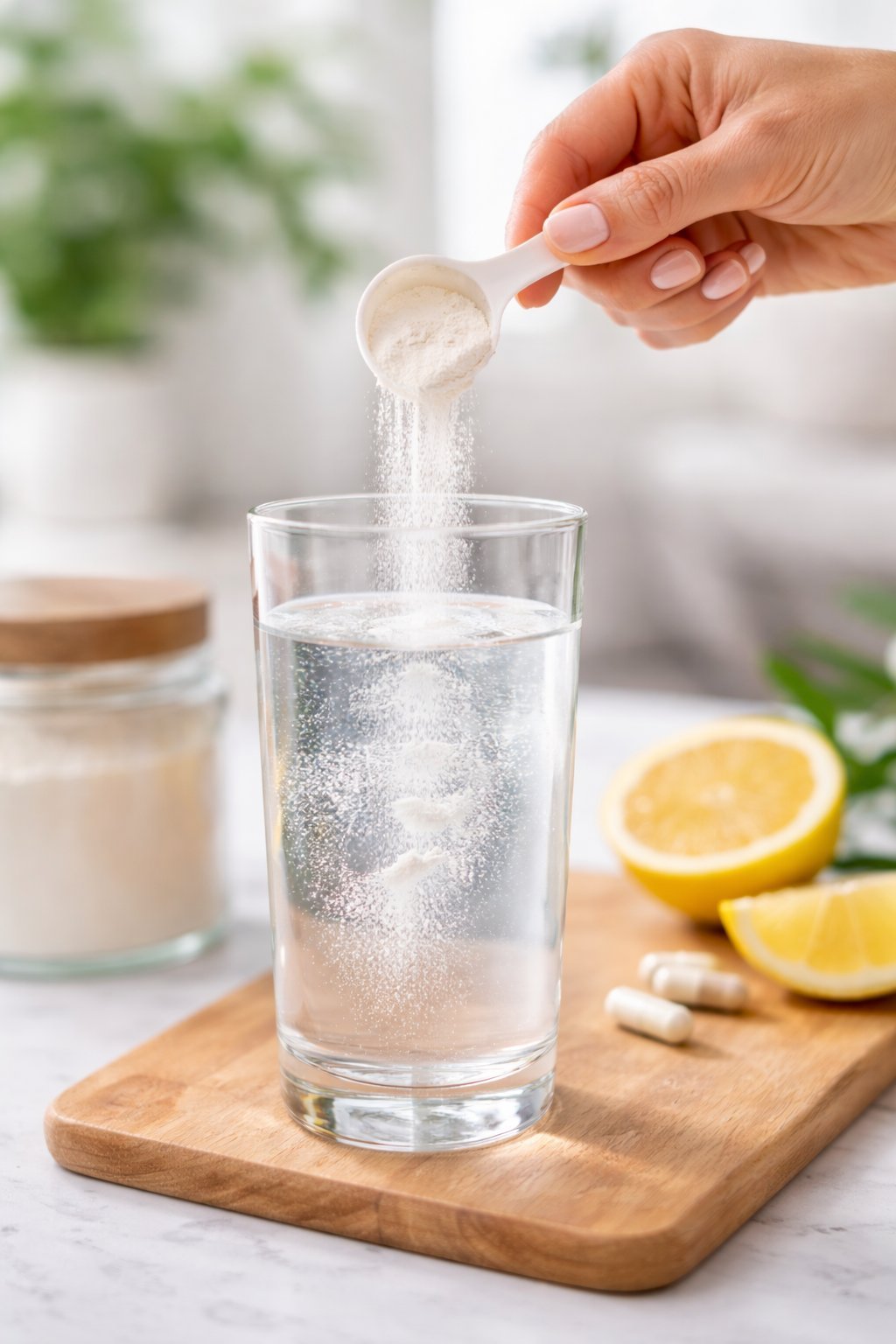
Does Collagen Actually Help Your Skin? Here's What the Science Shows
We went past the marketing and looked only at randomized controlled trials in real humans. The results are more honest — and more encouraging — than most brands will tell you.
The science is surprisingly solid — and refreshingly boring in the best way
Based on Human Clinical Trials
Randomized & Double-Blind Studies
No Brand Sponsorships
Optimal Living HQ
~40%
Reduction in wrinkle volume seen in randomized placebo-controlled trials
~30%
Increase in skin hydration measured vs placebo over 12 weeks
2.5g
Daily dose used in key skin elasticity studies — smaller than most products offer
The Real Question
Hype or Legitimate Science?
Collagen has officially entered its "is this legit or just hype?" era. You've probably seen it everywhere — powders in coffee, gummies at checkout, and bold promises about glowing skin and fewer wrinkles.
So what happens when you strip away the marketing and look only at randomized controlled trials in real humans? Short answer: collagen isn't magic, but the science behind skin benefits is surprisingly solid.
Most skin-related collagen studies used hydrolyzed collagen peptides — broken-down forms designed for absorption. The gold-standard trials were randomized, double-blind, and placebo-controlled. Participants didn't know what they were taking, researchers didn't either, and results were compared against a sugar pill. That's about as fair as science gets.
The Clinical Evidence
What Randomized Trials Actually Found
Here are the key studies — real trials, real humans, real results.
12-week placebo-controlled trial focused on surface-level skin quality using standardized analysis tools.
✦ Reduced skin roughness ✦ Improved hydration ✦ Better elasticity vs placebo ✦ Consistent across all markers
Across All Trials
What Made the Difference
Key patterns that held true across multiple studies regardless of dose or duration.
✦ Consistency mattered more than dose ✦ Daily use beat sporadic use every time ✦ Results compounded over 8–12 weeks ✦ Effects were real, not placebo-driven
Realistic Timeline
When Do People Actually See Results?
Based on clinical trials, here's what you can realistically expect with consistent daily use. Patience isn't optional — it's part of how collagen works.
🌱
Week 1–3: Foundation
Collagen peptides are absorbed and begin integrating into skin tissue. Most people feel nothing yet — but the process has started.
💧
Week 4–6: Early Signs
Early improvements in hydration and elasticity begin to appear. Skin may feel more plump or moisturized. Nails often start to feel stronger around this time too.
✨
Week 8–12: Visible Changes
More visible changes in wrinkle depth, texture, and overall skin quality. This is when most clinical trials measured their significant results.
🔄
Ongoing: Maintain & Build
Effects accumulate and persist with continued use. Ongoing daily use is recommended for best long-term results.
Timeline based on Proksch et al. (2014) and Carrillo-Norte et al. (2024)
Let's Be Honest
What Collagen Does — and What It Doesn't
Clinical trials are clear on both sides. Here's what the evidence actually supports.
✓
Supports skin hydration — measurably increases moisture content vs placebo
✗
Won't replace sunscreen — UV damage is the #1 driver of skin aging and collagen can't undo it
✓
Improves skin elasticity — skin behaves more like younger skin in objective measurements
✗
Won't instantly erase deep wrinkles — effects are gradual and modest, not cosmetic-surgery-level
Won't stop aging — collagen supports aging better, but doesn't halt it
✓
Builds procollagen & elastin — studies found increased structural proteins in skin tissue, not just surface hydration
✗
Results require consistency — sporadic use doesn't work; daily use over 8–12 weeks is what the trials used
Practical Guide
How to Take Collagen for Skin Results
The clinical trials that showed results used specific dosing habits. Here's how to replicate what worked.
01
Use 2.5–5g daily
This is the dose range used in skin trials. Many products offer 10–20g — more isn't necessarily better for skin, but it covers other benefits too.
02
Add it to your morning routine
One scoop in coffee, smoothie, or water. The key is making it automatic — something you don't have to think about each day.
03
Include Vitamin C
Vitamin C is essential for collagen synthesis. Look for a product that includes it, or add a squeeze of lemon to your drink.
04
Give it 8–12 weeks
This is where the clinical results showed up. Stay consistent and judge results at the 3-month mark — not week two.
The Verdict
So… Is Collagen Worth It for Your Skin?
If you're expecting a miracle — probably not. But if you're looking for better hydration, modest improvements in elasticity, and gradual reduction in wrinkle appearance, collagen is one of the better-studied supplements in the skin category.
No hype required. Just patience, consistency, and realistic expectations.
💧
Hydration
~30% improvement vs placebo in multiple RCTs
✨
Elasticity
Skin behaves structurally younger — confirmed by biological marker testing
🔬
Wrinkles
~40% reduction in wrinkle volume in imaging studies — gradual but real
My Personal Pick for Skin
The Collagen That Helped My Skin — And My Joints Too
I started taking collagen for joint pain and noticed my skin looking noticeably better within two months. Here's the product I use, why I chose it, and what actually happened.